From Storefront Windows to Shoreline Stabilization: The Mangrove Project Enters Year Three in Jupiter and Tequesta
JUPITER, FL — If you have walked past a small business window in the Jupiter or Tequesta area recently, you have likely noticed some unusual décor: vibrant green mangrove seedlings nestled in glass displays. Far from a passing design trend, these plants are serving as "mangrove ambassadors" for the community.
The initiative marks the official launch of Year Three for The Mangrove Project, a flagship environmental awareness campaign run by the Jupiter-based nonprofit organization Wildbluesea.
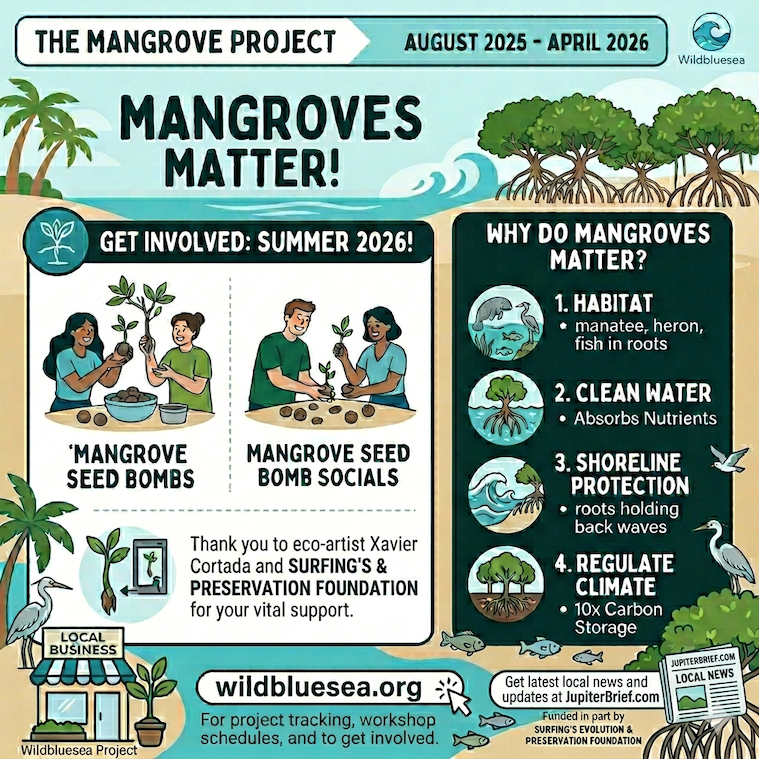
Running from August 2025 through April 2026, the project aims to combat declining local water quality by fostering "watershed literacy" and connecting residents directly to coastal preservation.
"When we have a healthy and respectful relation to the waterways—when we value waterways—then we all thrive," says Linda Emerson, coastal ecologist and Executive Director of Wildbluesea.
Small Businesses, Big Ambassadors
The project originally kicked off in August 2023. Volunteers rescued stranded red mangrove propagules (seedlings) that had washed up above the high tideline north of Cato’s Bridge and along the Jupiter beachfront. Left alone, these stranded seedlings would otherwise perish. Instead, they were given a purpose.
To date, more than 500 of these rescued propagules have acted as "ambassadors" in the storefronts of 20 local business partners. Over the last two years, these micro-displays have been viewed by thousands of residents and visitors, sparking critical conversations about the fragile ecosystem surrounding the Jupiter Inlet, Loxahatchee River, and Indian River Lagoon.
Why Mangroves Matter
Jupiter’s iconic turquoise waters are central to the region’s tourism, economy, and community well-being. However, locals have noted a steady decline in water quality alongside dwindling fish and marine life populations. Mangrove deforestation directly accelerates these environmental issues.
According to Wildbluesea, protecting and restoring mangroves provides four key ecological pillars:
- Wildlife Habitat: Mangrove root networks serve as crucial nurseries and feeding grounds for local species, including herons, snook, manatees, and sea turtles.
- Water Filtration: The plants act as nature’s filtration system, absorbing excess nitrates, phosphates, and runoff chemicals before they can fuel toxic algae blooms.
- Erosion Control: Dense, interlocking root structures stabilize the shoreline, slowing down wave energy and locking in sediment to fight coastal erosion.
- Climate Regulation: Mangroves are powerful carbon sinks, capturing and storing carbon in underwater sediment at a rate ten times greater than tropical rainforests.
Get Involved: Summer 2026 'Seed Bomb' Socials
As the project cycles into its next phase, the community is being invited to transition from passive viewers to active restoration participants. Throughout Summer 2026, Wildbluesea will host a series of Mangrove Seed Bomb Workshops and Socials.
Inspired by the ecological art concepts of Xavier Cortada, these interactive workshops allow attendees to build nutrient-rich "seed bombs" encasing the matured mangrove seedlings. Once prepared, the seed bombs will be deployed directly along the shorelines of the Indian River Lagoon to help permanently restore lost habitats.